
How to measure your waist, abdomen, hips, chest and arms consistently
A practical method that keeps today’s centimetres comparable with next month’s measurements.
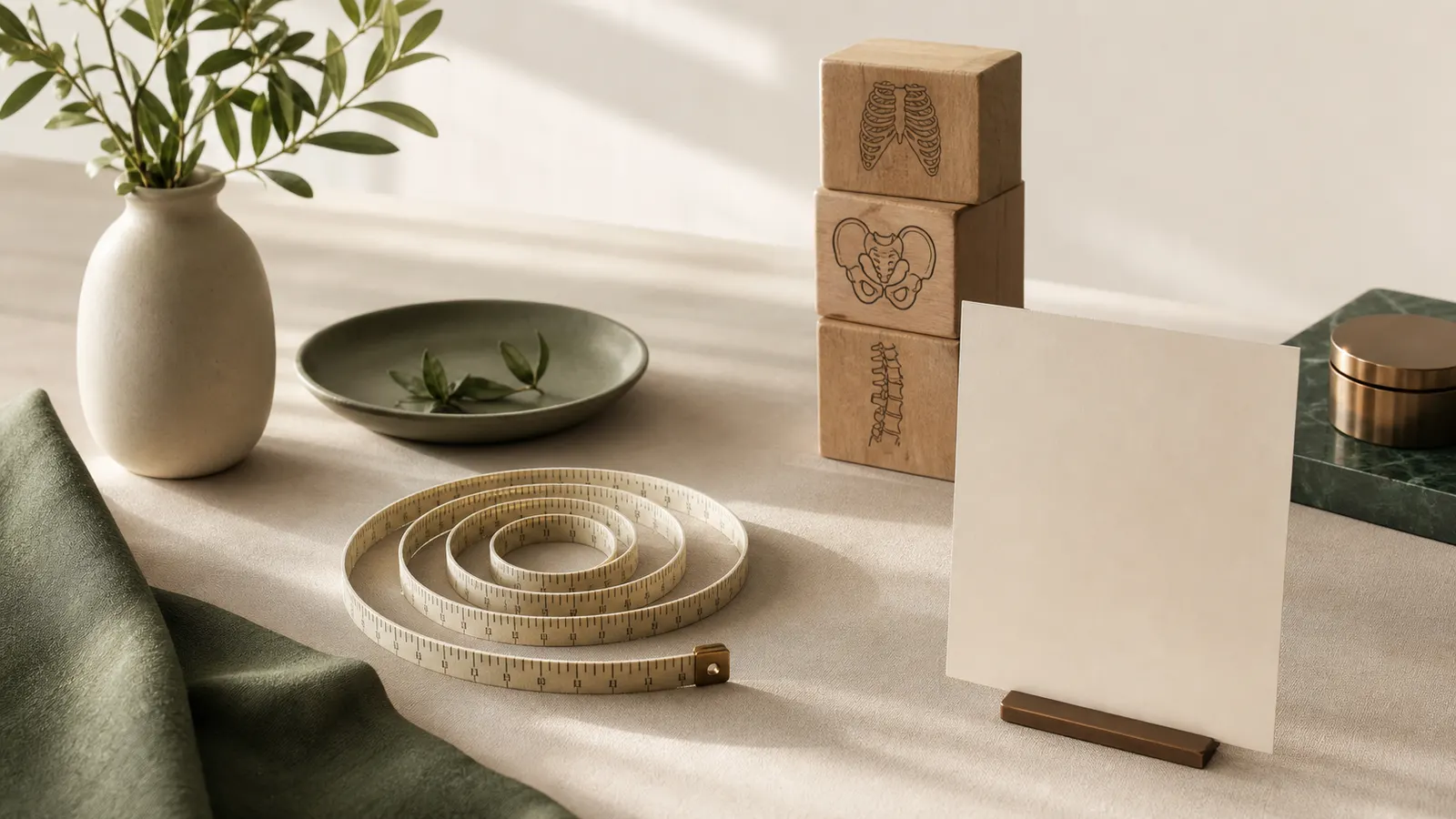
Consistency matters more than perfection
A tape measure is highly useful only when you return to the same anatomical point. Decide where each measurement belongs and do not change the method halfway through.
Measure at a similar time of day, preferably before a meal and with relaxed muscles. Keep the tape horizontal and close to the skin without compressing it.
Use fixed landmarks
Measure the waist at the narrowest point between ribs and hip bone. Measure the abdomen at navel height. Take hips around the widest part of the buttocks and chest around the widest part of the ribcage.
Measure upper arm and thigh at their thickest point with relaxed muscles. Shoulder circumference runs around the widest point of both shoulders.
Reduce measurement error
Take every measurement twice. If the readings differ clearly, take a third and record the middle value.
Small errors are normal. Judge change across several sessions, not from one isolated half-centimetre shift.
Build your own measurement protocol
Write one short instruction for each body area: anatomical landmark, posture, arm or leg position and phase of breathing. A neutral reference photo can show the tape position. Use the same tape and, when possible, the same day and time. This makes the method reproducible instead of dependent on memory.
Several recognised waist landmarks exist. Protocols may measure just above the hip bone, midway between the lowest rib and iliac crest, or at the narrowest point. No method is magical; switching between them destroys comparability. Choose one definition, label it clearly and stay with it. VitalGraph separates waist from abdomen at navel height to prevent those concepts being mixed.
Tension, breathing and rounding
Let the tape touch the skin without leaving an indentation. Do not pull harder to obtain a preferred number and do not let it sag. Take torso measurements after a normal exhalation without drawing in the abdomen. Keep arms and legs relaxed unless you deliberately follow a flexed sports protocol.
Record realistic precision. A flexible tape and a human landmark rarely justify hundredths of a centimetre. Round consistently, for example to 0.1 or 0.5 centimetre. False precision does not improve reliability and encourages interpretation of differences smaller than the measurement error.
How to recognise real change
Estimate the typical error of your own method by taking each circumference three times on several days. If waist readings within one session span 0.8 centimetres, a 0.3-centimetre difference between weeks is not strong evidence of change. A repeated movement in the same direction is more convincing.
Mark circumstances that affect comparability: a large meal, hard leg training, soreness, menstruation, bloating or a different person holding the tape. Do not automatically delete unusual readings. Keep them with context so the reason for one divergent point remains visible.