
Health Score and Vitality Score explained
Why VitalGraph deliberately separates health reference ranges from personal goal progress.
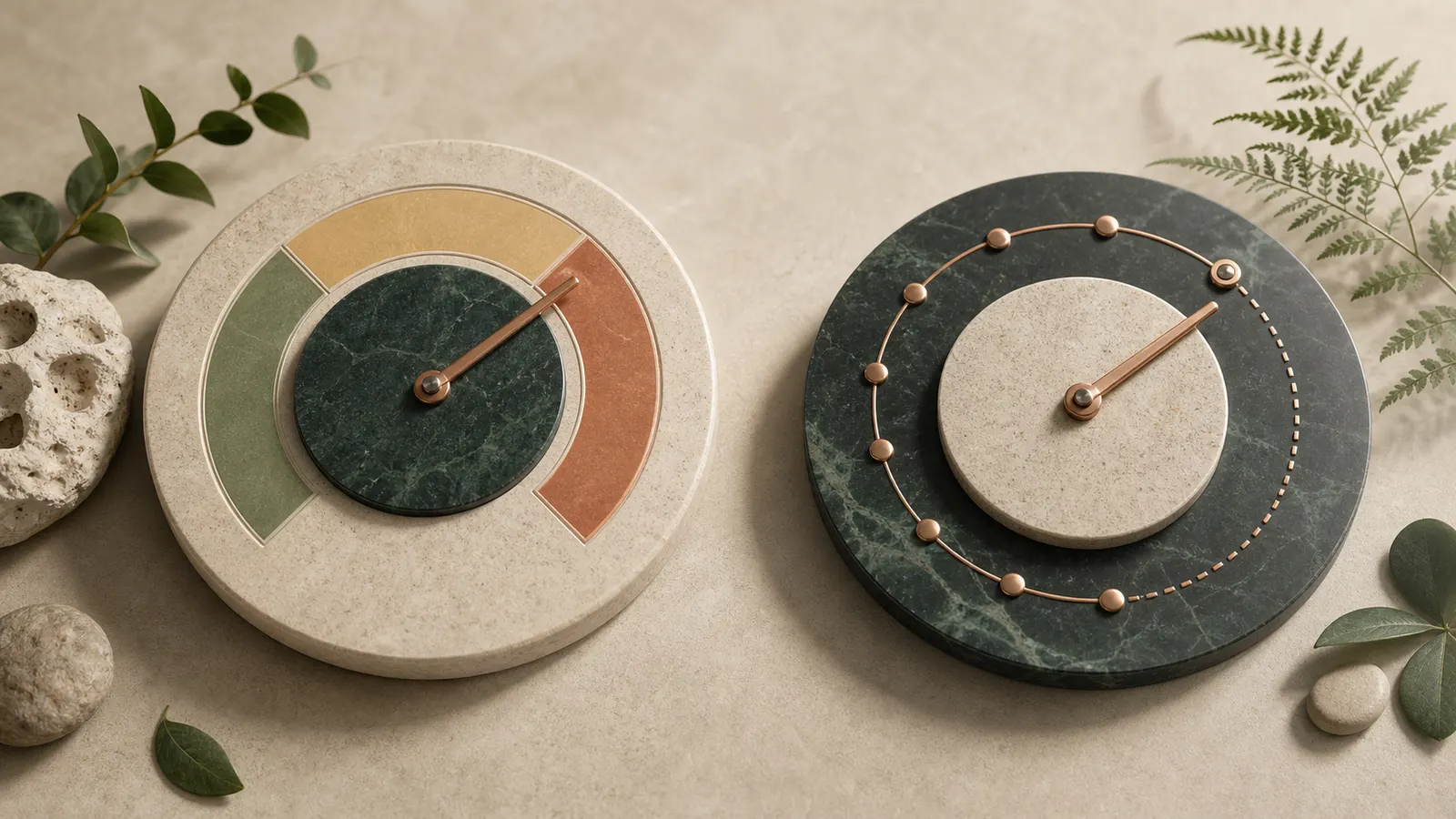
Two different questions
Health Score asks how measured health values compare with available reference ranges. Vitality Score looks at progress towards your personal goals.
A person may have favourable health markers but little short-term goal progress. Strong personal progress can also exist while a value remains outside a preferred range.
Health uses reference values
Only measurements with appropriate norms contribute. Age, sex and calculated markers may be part of the interpretation.
A score simplifies information but never replaces diagnosis. Always inspect the underlying values and trends.
Vitality uses your direction
A goal can move down, up, remain stable or aim for a concrete value. Vitality evaluates movement in that chosen direction.
Keeping the scores separate shows both where you stand and whether your plan is working.
How a composite score is built
A composite score converts values with different units to a common scale and combines them according to rules. This requires choices: which values count, which reference applies, how much each part weighs and what happens when data is missing? Those choices must remain visible and explainable.
VitalGraph therefore shows underlying cards and explanations. A total without components can hide opposing changes: improved blood pressure may occur alongside deterioration elsewhere. Open the score before drawing conclusions and check which date and attributes produced it.
Missing and older values
A score with few recent measurements contains less information. Carried historical values may support continuity, but must not imply they were measured again today. Date, source and recency should remain visible beside each component.
Compare scores only when their composition is comparable. Adding blood pressure or a new goal later can change the total without the body changing that day. Mark configuration changes and inspect the individual trends too.
Use a score for navigation
A score helps decide where to look next. It is useful for overview, motivation and conversation, not diagnosis or competition between people. Personal goals, medication, age and health conditions make direct rankings misleading.
Ask three questions whenever it moves: which component changed, was the measurement reliable and does it agree with other signals? Only then choose an action. Sometimes the right step is measuring again; sometimes adjusting behaviour; sometimes seeking professional advice.